
Do you have a bunion that is causing you constant and severe pain? Here are 6 simple tips to follow to ease bunion pain without surgery.
A bunion forms when the bone or tissue at the joint at the bottom of the big toe moves out of place. Years of abnormal motion and pressure on the joint forces the big toe to bend toward the others, which sometimes causes a painful bunion on the joint.
This can then lead to a number of symptoms, including:
How Do You Treat Bunions?
In the short-term, there are several different conservative treatment options available to relieve the uncomfortable and painful symptoms of bunions, including maintaining a healthy weight, using NSAIDs prescribed to you by your podiatrist, and physical therapy.
However, in the long-run, bunion surgery is the only option that will completely resolve your foot problem.
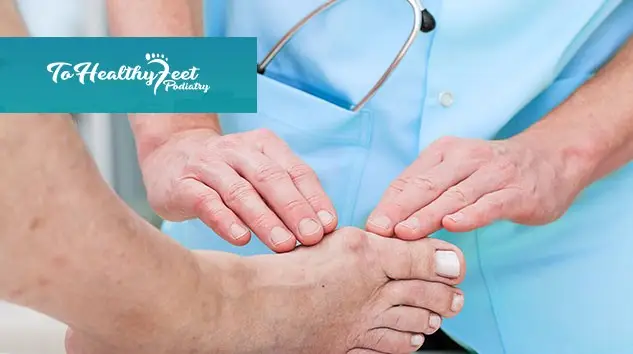
At To Healthy Feet, our team of award-winning and highly professional NYC foot doctors are dedicated to helping you achieve optimal foot function and health. We are able to create custom orthotics to help treat a range of issues, including high arches, hammertoe, and a range of pediatric foot deformities, amongst others.
Want to know more? BOOK A CONSULTATION
Bunions are permanent unless they are surgically corrected. The good news? There are certain measures you can take to ease your pain, feel more comfortable, and slow down a bunion’s progression.
Here are 6 simple tips to help ease your bunion pain without surgery:
In many cases, bunion pain can be managed by switching to shoes that are roomy enough to accommodate the bunion and allow you to wiggle your toes. A square toe box is the most desirable shape, but a round one is still better than a pointed one.
You should try to wear low heels (no more than 1 inch high), but if you want to wear higher heels, find a pair that has a relatively wide heel.
Apply ice wrapped in a thin cloth to the toe joint for approximately 10-20 minutes at a time. Ice constricts the blood vessels, which numbs the pain and helps relieve any swelling that you may be experiencing.
Topical or oral nonsteroidal anti-inflammatory drugs (NSAIDs) can help control the pain of a bunion. For severe bunions, a cortisone injection into the right joint can work to relieve any swelling and pain. Because the injection is localized, it does a more effective job than a pill. However, because the inflammation will build up again, the results are likely to be temporary.
Custom orthotics work to correct the mechanics that caused the bunion to form in the first place. By limiting abnormal pronation, they will stabilize the big toe joint and bones in the foot. So besides eliminating pain, they can also keep your bunions from progressing.
If your shoes have enough space to accommodate them, you can cushion your bunion or protect it from friction with a gel or moleskin pad. Talk to your NYC podiatrist as they can best advise which type of protective pad is best for your specific needs.
If you are overweight, your foot and big toe joint are under more pressure than they need to be. The higher the pressure the toe joint is under, the higher the chance of it developing into a bunion, or the existing bunion becoming inflamed and sore.
Bunions are permanent unless they are surgically corrected. The good news? There are certain measures you can take to ease your pain, feel more comfortable, and slow down a bunion’s progression.
Here are 6 simple tips to help ease your bunion pain without surgery:
In many cases, bunion pain can be managed by switching to shoes that are roomy enough to accommodate the bunion and allow you to wiggle your toes. A square toe box is the most desirable shape, but a round one is still better than a pointed one.
You should try to wear low heels (no more than 1 inch high), but if you want to wear higher heels, find a pair that has a relatively wide heel.
Apply ice wrapped in a thin cloth to the toe joint for approximately 10-20 minutes at a time. Ice constricts the blood vessels, which numbs the pain and helps relieve any swelling that you may be experiencing.
Topical or oral nonsteroidal anti-inflammatory drugs (NSAIDs) can help control the pain of a bunion. For severe bunions, a cortisone injection into the right joint can work to relieve any swelling and pain. Because the injection is localized, it does a more effective job than a pill. However, because the inflammation will build up again, the results are likely to be temporary.
Custom orthotics work to correct the mechanics that caused the bunion to form in the first place. By limiting abnormal pronation, they will stabilize the big toe joint and bones in the foot. So besides eliminating pain, they can also keep your bunions from progressing.
If your shoes have enough space to accommodate them, you can cushion your bunion or protect it from friction with a gel or moleskin pad. Talk to your NYC podiatrist as they can best advise which type of protective pad is best for your specific needs.
If you are overweight, your foot and big toe joint are under more pressure than they need to be. The higher the pressure the toe joint is under, the higher the chance of it developing into a bunion, or the existing bunion becoming inflamed and sore.
With four foot offices to serve you better, visit us at Grand Central, Downtown Manhattan, Upper East Side, or Times Square. Take the step towards healthy feet and book today!

Why Location Matters When Considering Foot Surgery Surgical decision-making involves more than selecting a…

Surgery Is Structural, Not Cosmetic Many patients underestimate the complexity of foot surgery. Procedures such…

What Is Minimally Invasive Foot Surgery? Minimally invasive foot surgery involves correcting structural…
Our award-winning podiatrists at 4 Manhattan locations treat every condition — from heel pain to minimally invasive surgery — with care plans built around your lifestyle and budget.
Available at all 4 NYC locations
Walk in, walk out — no general anesthesia
We handle the billing so you don't have to
As seen in Forbes & InStyle Magazine