
Morton’s neuroma refers to nagging pain affecting the ball of your foot一 most often in the area between your third and fourth toes. While this condition is not life-threatening, the constant discomfort can seriously detract from your quality of life.
Morton’s neuroma has been traditionally treated with physical therapy and sometimes steroid injections or surgery. Recently, a more effective treatment has emerged: minimally invasive cryosurgery. Unlike earlier treatments, this one-time procedure produces near instantaneous results and requires almost no downtime.
To Healthy Feet Podiatry is your clinic of choice if you are considering cryosurgery for your neuroma. Our foot doctors are among the first to adopt this technology in the US and have used it to successfully treat patients in NYC.
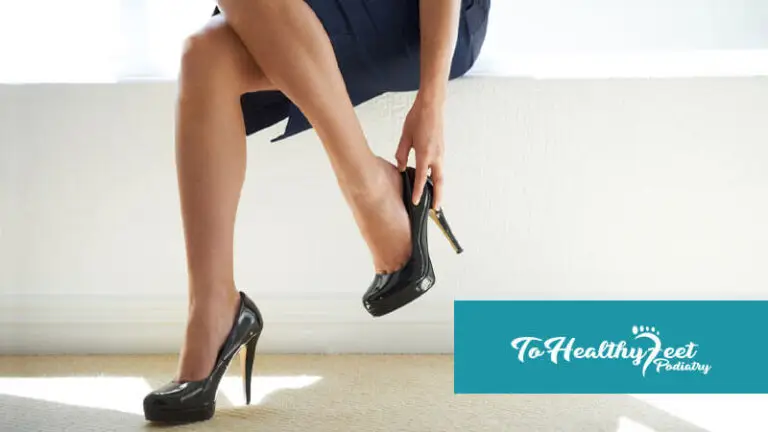
Morton’s neuroma is the thickening of the sheath tissue of one of the nerves leading to your toes. As the tissue thickens, the nerve becomes stressed, producing constant or radiating pain, or tingling and numbness in the ball of the foot or the area between the third and fourth toes. Though rarely dangerous, this condition is unlikely to go away on its own and can significantly impact daily activity and quality of life. Morton’s neuroma can affect anyone of any age. Tight-fitting footwear such as high heels has been shown to be associated with its development, and individuals who regularly engage in high-impact activities are also at increased risk of developing the condition.
Cryosurgery is rapidly becoming a preferred treatment for Morton’s neuroma due to its minimally invasive nature, quick delivery, relatively painless experience, and exceptionally high rate of success. It is particularly favored among athletes who want to fully restore foot function and return to their sport as quickly as possible. The procedure uses extreme cold to destroy the thickened nerve sheath that has enveloped the affected toe nerve. A 6 to 10mm ice ball reaching temperatures as low as -70°C is formed at the tip of a cryo-needle, causing nerve degeneration and inhibiting pain signals. A local anesthetic may be applied to numb the treatment area prior to the procedure. Importantly, cryosurgery leaves the toe nerve intact, allowing for regeneration. This means there is no risk of loss of sensation or the development of stump neuroma — nerve pain in the foot that can result from more invasive surgical approaches.
Cryosurgery is rapidly becoming a preferred treatment for Morton’s neuroma due to its minimally invasive nature, quick delivery, relatively painless experience, and exceptionally high rate of success. It is particularly favored among athletes who want to fully restore foot function and return to their sport as quickly as possible. The procedure uses extreme cold to destroy the thickened nerve sheath that has enveloped the affected toe nerve. A 6 to 10mm ice ball reaching temperatures as low as -70°C is formed at the tip of a cryo-needle, causing nerve degeneration and inhibiting pain signals. A local anesthetic may be applied to numb the treatment area prior to the procedure. Importantly, cryosurgery leaves the toe nerve intact, allowing for regeneration. This means there is no risk of loss of sensation or the development of stump neuroma — nerve pain in the foot that can result from more invasive surgical approaches.
Cryosurgery’s very low rate of complications, minimal recovery time, and quick and relatively painless delivery make it one of the most effective and patient-friendly treatments available for Morton’s neuroma. This is especially evident when compared to conventional surgical procedures, which are more invasive, carry moderately higher risks, and typically require significantly longer recovery periods. For patients who have not responded adequately to conservative care and are seeking a surgical solution that minimizes disruption to daily life and activity, cryosurgery represents an outstanding option. Your NYC podiatrist will evaluate your symptoms, imaging findings, and overall health profile to determine whether cryosurgery is the most appropriate next step for your specific condition.
With four foot offices to serve you better, visit us at Grand Central, Downtown Manhattan, Upper East Side, or Times Square. Take the step towards healthy feet and book today!

Why Location Matters When Considering Foot Surgery Surgical decision-making involves more than selecting a…

Surgery Is Structural, Not Cosmetic Many patients underestimate the complexity of foot surgery. Procedures such…
What Is Minimally Invasive Foot Surgery? Minimally invasive foot surgery involves correcting structural…
Our award-winning podiatrists at 4 Manhattan locations treat every condition — from heel pain to minimally invasive surgery — with care plans built around your lifestyle and budget.
Available at all 4 NYC locations
Walk in, walk out — no general anesthesia
We handle the billing so you don't have to
As seen in Forbes & InStyle Magazine