
Minimally invasive foot surgery, sometimes referred to as microsurgery, allows specific structural foot and ankle conditions to be treated through small incisions using precision-guided instrumentation. Rather than large open exposures, these procedures rely on specialized tools supported by ultrasound or radiographic guidance to reposition bone or remove damaged tissue while limiting disruption to surrounding structures.
In NYC, where mobility is essential and recovery time matters, many patients ask whether their condition can be corrected without a traditional open procedure. Not every foot problem qualifies for minimally invasive correction. Candidacy depends on deformity severity, tissue quality, joint integrity, and overall biomechanics.
At To Healthy Feet Podiatry, surgical planning begins with comprehensive evaluation and imaging. When clinically appropriate, conditions such as bunions, chronic plantar fasciitis, and certain cases of Morton’s neuroma may be treated through small incision techniques. Benefits may include shorter recovery windows, earlier protected weight-bearing, and reduced visible scarring compared to open surgery. Schedule a consultation at any of our locations in Grand Central Midtown, Downtown Manhattan, Upper East Side, and Times Square to determine whether minimally invasive foot surgery in NYC aligns with their diagnosis and long-term goals.
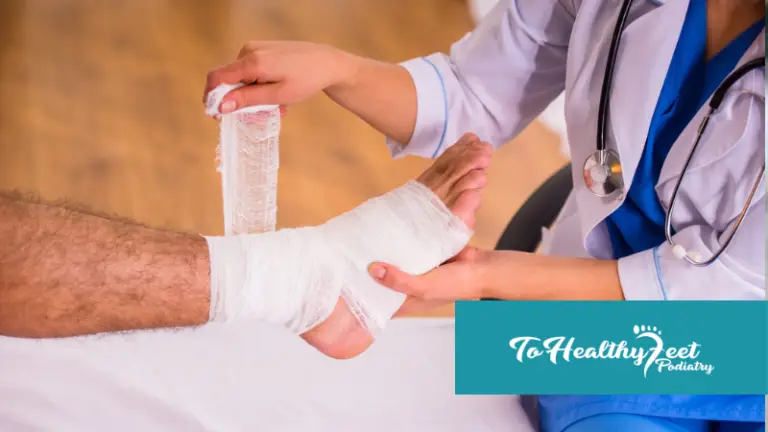
Minimally invasive foot surgery involves correcting structural problems through small incisions rather than traditional open approaches. Thin precision instruments are inserted through limited access points to shave, remove, or reposition bone and soft tissue.
According to the service page, these procedures are performed in-office and may be guided by ultrasound or radiography. Because surrounding tissues are not widely dissected, soft tissue trauma is reduced compared to open surgery.
Potential advantages include:
However, the size of the incision does not determine surgical success. Accurate correction of the underlying structural problem remains the priority.
Not every foot condition is appropriate for microsurgical treatment. Proper evaluation determines eligibility.
Bunions (Hallux Valgus)
Mild to moderate bunion deformities may be corrected using minimally invasive osteotomy techniques. Small incisions allow the first metatarsal to be realigned while preserving surrounding soft tissue.Candidates typically demonstrate:
Chronic Plantar Fasciitis
Patients with chronic heel pain who have failed conservative care may qualify for minimally invasive approaches such as ultrasonic debridement or endoscopic plantar fascia release.
These techniques target degenerative fascia tissue or reduce excessive tension without large incisions. Imaging and symptom duration guide decision-making.
Morton’s Neuroma
Certain cases of Morton’s neuroma may be addressed using minimally invasive techniques such as cryotherapy or small incision nerve procedures. These approaches aim to reduce nerve irritation while limiting soft tissue disruption.
Accurate diagnosis is essential. Forefoot pain can stem from multiple causes, and not all conditions mimic neuroma.
Other Forefoot Structural Issues
Depending on severity and anatomy, some toe deformities or localized bone prominences may be managed through small incision correction. Each case requires individualized assessment.
Not every foot condition is appropriate for microsurgical treatment. Proper evaluation determines eligibility.
Bunions (Hallux Valgus)
Mild to moderate bunion deformities may be corrected using minimally invasive osteotomy techniques. Small incisions allow the first metatarsal to be realigned while preserving surrounding soft tissue.Candidates typically demonstrate:
Chronic Plantar Fasciitis
Patients with chronic heel pain who have failed conservative care may qualify for minimally invasive approaches such as ultrasonic debridement or endoscopic plantar fascia release.
These techniques target degenerative fascia tissue or reduce excessive tension without large incisions. Imaging and symptom duration guide decision-making.
Morton’s Neuroma
Certain cases of Morton’s neuroma may be addressed using minimally invasive techniques such as cryotherapy or small incision nerve procedures. These approaches aim to reduce nerve irritation while limiting soft tissue disruption.
Accurate diagnosis is essential. Forefoot pain can stem from multiple causes, and not all conditions mimic neuroma.
Other Forefoot Structural Issues
Depending on severity and anatomy, some toe deformities or localized bone prominences may be managed through small incision correction. Each case requires individualized assessment.
The service page indicates recovery may range from one to several weeks depending on the procedure. Many patients are able to bear weight shortly after surgery, although activity progression is structured.
Recovery considerations include:
While some minimally invasive procedures allow earlier mobility compared to open surgery, bone healing timelines remain biologically consistent.
For Manhattan patients with high daily walking demands, individualized recovery planning is critical.
While reduced scarring is appealing, the primary benefit of minimally invasive surgery lies in controlled tissue handling. Less disruption may translate to:
However, outcome durability depends on accurate diagnosis, proper technique selection, and adherence to postoperative care.
Minimally invasive foot surgery NYC patients seek is not a universal solution. A structured evaluation includes:
At To Healthy Feet Podiatry, surgical recommendations are based on objective findings rather than preference for smaller incisions.
Patients across Grand Central Midtown, Downtown Manhattan, Upper East Side, and Times Square receive individualized consultation to determine whether microsurgery aligns with their diagnosis.
Advancements in microsurgical tools and imaging guidance have expanded the range of conditions that may be corrected through small incisions. However, the decision to pursue minimally invasive foot surgery must balance cosmetic appeal with structural stability.
For patients in NYC seeking surgical correction with thoughtful planning and modern technique selection, a comprehensive consultation is the first step. Schedule an appointment with To Healthy Feet Podiatry to determine whether your condition qualifies for minimally invasive correction and to explore the most appropriate surgical pathway for long-term mobility.
Q: Is minimally invasive foot surgery safer than open surgery?
A: Safety depends on proper patient selection and surgical technique. Minimally invasive procedures may reduce soft tissue disruption and wound size, but they are not automatically safer in all cases. Appropriate diagnosis and planning determine overall risk profile.
Q: Does minimally invasive surgery mean no downtime?
A: No. Although recovery may be shorter for certain procedures, tissue healing still requires time. Many patients can bear weight early, but full return to unrestricted activity depends on the condition treated.
Q: How do I know if I qualify for minimally invasive foot surgery in NYC?
A: Eligibility depends on deformity severity, joint health, and biomechanical factors. A comprehensive evaluation including imaging determines whether small incision correction is appropriate for your specific condition.
With four foot offices to serve you better, visit us at Grand Central, Downtown Manhattan, Upper East Side, or Times Square. Take the step towards healthy feet and book today!

Why Location Matters When Considering Foot Surgery Surgical decision-making involves more than selecting a…

Surgery Is Structural, Not Cosmetic Many patients underestimate the complexity of foot surgery. Procedures such…
What Is Minimally Invasive Foot Surgery? Minimally invasive foot surgery involves correcting structural…
Our award-winning podiatrists at 4 Manhattan locations treat every condition — from heel pain to minimally invasive surgery — with care plans built around your lifestyle and budget.
Available at all 4 NYC locations
Walk in, walk out — no general anesthesia
We handle the billing so you don't have to
As seen in Forbes & InStyle Magazine